BigHook Chat — Wednesday, September 6, 2006
| Sep 6 | 8:00 AM |
| David I. | This is a test message. |
| Sep 6 | 1:15 PM |
| David I. | Welcome to Bighook! |
| David I. | You're invitations to this chat are coming via email to you. |
| David I. | test |
| scott o. | testing |
| Sep 6 | 1:40 PM |
| David I. | test test |
| Jorge | Testing, Testing |
| Sep 6 | 1:45 PM |
| Joi I. | tap tap |
| Joi I. | testing a URL paste: http://en.wikipedia.org/wiki/World_of_Warc… |
| Joi I. | these appears to be a slight delay. Are we being "moderated"? |
| Frank P. | or immoderated? |
| Kevin M. | Buzzword bingo? |
| Sep 6 | 1:50 PM |
| scott o. | what if you type n16y? does that cost $20? |
| Kevin M. | heh |
| elliot n. | welcome joi itu |
| Susan C. | |
| David I. | Access Point: AH |
| Sep 6 | 1:55 PM |
| steve k. | yee hah! |
| Kevin M. | testing the lag |
| steve k. | definitely ask anders to tell you Rwanda stories... |
| Rick W. | lagging, lagging.... |
| Kevin M. | 50 seconds |
| David I. | test |
| Rick W. | Do we also pay $20 if we type and publish the dreaded phrase? |
| Frank P. | net newt, net newt |
| Sep 6 | 2:00 PM |
| Kevin M. | "she turned me into a net newt" |
| Clegg I. | "I got better" |
| David I. | test |
| Clegg I. | |
| Don J. | Yes, Rocketsource is very cool! |
| Rahul T. | testing - BTW, while we can't say "NN", can we TYPE it? |
| Sep 6 | 2:05 PM |
| David I. | All, there is a small speaker icon in the upper right. |
| David I. | You may want to click it to turn off the pleasant little beep. |
| Sep 6 | 2:10 PM |
| elliot n. | no rahul you can't......NN will be sufficient! |
| Kevin M. | so we can chat in secret in here for now |
| scott o. | semi secret at best |
| Sep 6 | 2:15 PM |
| David I. | . |
| steve k. | no "whisper" function - bummer. bring back the old system |
| Sep 6 | 2:20 PM |
| David I. | Thanks, Steve. Maybe we will... |
| Kevin M. | eric, I need to harass you about blogspot sometime... |
| Sep 6 | 2:25 PM |
| Eric C. | Kevin - yes, my business card should probably read, "Blogger Apologist" |
| Doc S. | Testing. 2:26:18am. |
| Kevin M. | heh |
| David I. | I see that very quickly, Doc. At 2:26. |
| scott o. | still not that responsive 2:26:50 |
| scott o. | yes - quick on the web but slow on the screen |
| David I. | We used this system at David's F2C: Freedom to Connect conference and did not have this delay. |
| Kevin M. | greg, just put your one on the screen? |
| scott o. | is the screen using the same web interface? |
| David I. | Kevin M: Yes. |
| David I. | Lavalife!! David is getting into the applications layer! |
| Kevin M. | SEM? SEO? |
| David I. | Search Engine Marketing |
| Eric C. | SEM... black hat or white hat? ;) |
| Sep 6 | 2:30 PM |
| Kevin M. | watch us search engine people look nervous... |
| steve k. | What happens when you connect XML to Asterix? does it make better margarita's? |
| Kevin M. | it makes magic potions? |
| Sep 6 | 2:35 PM |
| Steve S. | The SEM thing is white hat, just a couple guys helping people figure out to use adsense and track there results. Nothing evil here. |
| Steve S. | lag |
| Steve S. | Asterisk plus VxML can sound like its making good margaritas. If you have the right wav file |
| steve k. | Tom - what is wrong with wi-max? |
| steve k. | $120 for a mesh network radio - not bad |
| David I. | Tom Freeburg puts a call to arms for an open source mesh network! |
| Sep 6 | 2:40 PM |
| steve k. | i-max = the question in my mid s whether Intel has invested so much corproate pride and $$ in t that they will "make" it work regardless... Maybe if we quietly renamed canopy "wii-max" and get intel on board? |
| Sep 6 | 2:45 PM |
| Kevin M. | Intel can't spend it's way into ubiquity - look at the Viiv mess |
| Kevin M. | Induced latency? is it a conspiracy? |
| Rahul T. | Green WiFi talks of $200 for a wireless node *including* solar power |
| steve k. | ViiV = MSFT "Bob" = whatever the name of Apple's online community = Verizon's IOBI phone = Sprint's ION = Minitel |
| Tom F. | We tried that - the problem is that Intel and the telco-like people want LICENSED frequencies; they've already invested big in them -- and the technical answers are somewhat different, and they think they can take care of interference with "system planning" |
| steve k. | oooh - forgot "WAP" and MMS |
| Rahul T. | estimating 1.5 min delay to the screen... |
| Sep 6 | 2:50 PM |
| Kevin M. | Stuart Cheshire said something like "they gave us the bit of spectrum that no-one wanted because it had microwave ovens in, and look what we did with it" |
| Kevin M. | Being forced to write resilient code can be a really good idea |
| scott o. | timing test - 2:50:55 |
| Frank P. | have you noticed that web 1.0 was e-this and e-that whereas web 2.0 drops the "e" (flickr, buttr, etc.) |
| David I. | Oh, stop, SOB. |
| David I. | Frank P.: Coincidence? I don't think so... |
| scott o. | 1.2 min (just getting data Greg :-) ) |
| steve k. | "system planning" = also known as the layer of blubber in telcos operating expense lines that uses increasingly expensive human capital as a replacement for increasingly cheap physical capital... |
| Kevin M. | like changing all the phone numbers in London 4 times for no good reason |
| Sep 6 | 2:55 PM |
| steve k. | I always wonder if the cable industry's real advantage isn't really a better network (although it is) as much as (relatively) fewer people trying to perpetuate complexity as a means of keeping their jobs. |
| Clegg I. | amen, brother! |
| Sep 6 | 3:00 PM |
| scott o. | story in press about cablelabs claim that new cable infrastructure needed to keep up with fiber to home etc |
| David I. | test |
| scott o. | seemed to be a cablelabs justification to me |
| David I. | test again |
| steve k. | scott o - think that was actually just a reporter trying to fill a slow august. total hogwash. |
| David I. | test again |
| David I. | I believe performance might be better now... |
| Clegg I. | seems so |
| Eric C. | ping |
| steve k. | SOB - how do we sign up for your class if we wanted to? and do we have to pay extra to sit in the front row and heckle? FYI - Scott has the best disclaimers in the business bar none. I aways stop and read it (even if I skim the column) |
| David I. | And will there be online chat for your class, SOB? |
| Sep 6 | 3:05 PM |
| scott o. | re my class csci e 170 - http://dceweb.harvard.edu/prod/sswckce.taf… |
| Kevin M. | How about playing werewolf? |
| scott o. | same price for in person and on the web |
| Frank P. | wow = net crack? |
| Clegg I. | yes |
| Kevin M. | "Every day, millions of workers, many of them children, toil at monotonous tasks in poorly lit rooms, wasting away their health while serving an international corporate machine based in Silicon Valley. This menace is known as World of Warcraft." - valleywag |
| David I. |  |
| scott o. | steve k - not sure the hogwash was one step removed from cablelabs |
| David I. |  |
| David I. | Ok. Chat performance definitely improved. |
| steve k. | FYI - one of the bigger problems in the massively multiplayer world (world of warcraft) is scaling up the server farms to maintain a persistent/consstent "state" across all the people logged in (so what you see on your screen is the same as what the guy in malaysia playing the Wizard next to you sees). Is drivin some intersting innvation in massive server clusters to handle that centralized load. |
| Kevin M. | http://video.google.com/videoplay?docid=-8… WoW recruiting video for joi's guild |
| David I. | Also, photos are driving innovation in server technologies. People looking at alternatives to traditional databases, and traditional backup strategies. |
| Sep 6 | 3:10 PM |
| Robin C. | nytimes today, "Online Game, Made in US, Seizes Globe" URL is too long to post |
| Rahul T. | Robin, someone can have a tinyurl... |
| Kevin M. | and use the chat for non-interrupting parallel comments |
| Doc S. | If this screen is silent, is this an improvement? |
| Kevin M. | that reminds me, I forgot to mention microformats in my intro |
| Frank P. | |
| Kevin M. | The Red Flag bill is a classic too |
| Sep 6 | 3:15 PM |
| steve k. | just a thought... |
| Kevin M. | http://en.wikipedia.org/wiki/Red_Flag_Act - when the entrenched Railway lobby inserted a clause requiring any self-propelled road vehicle to have a man walking 60 yards ahead of it, carrying a red flag to keep it under 4mph in the country and 2mph in town. |
| steve k. |
|
| steve k. | sorry - $96,000 total |
| Clegg I. | things I forgot to mention in my intro: (1) Skype IVR effort that Don mentioned; (2) my passion for issues surrounding digital music (was on the legal team for the first MP3 case--the one where the RIAA got their butts kicked); and (3) my love of the free market and fear of regulation |
| Eric C. | (and I forgot to mention meditation in my intro, which is another extracurricular interest ;) |
| steve k. | Odlyzko's problem is that people really prefer to use anecdotes vs facts. I cant tell you the number of people I have gven his papers to who continue to revert to anecdotes from whatever telco guy they talked to last... |
| Robin C. | where can we find Andrew's paper? |
| David B. | But I want a choice in my web ;-) |
| kc c. | |
| Robin C. | thanks |
| Kevin M. | Andrews papers have good anecdotes in too |
| Rick W. | We humans think in terms of stories, not statistics or facts. It's very difficult to overcome our evolutionary heritage. |
| Kevin M. | Stories about postage and railways and early phones |
| Sep 6 | 3:20 PM |
| Doc S. | I love "rail neutrality". |
| Kevin M. | WoW is Joi's real life now |
| Kevin M. | And if you take Joi's mean location over time it tends towards the centre of the earth |
| David I. | WoJ? |
| Clegg I. | but what does he think of Horde Paladins and Alliance Shamen? |
| Sep 6 | 3:25 PM |
| Doc S. | Is "half life" one quarter of Second Life? |
| David B. | So here's my "not Dylan" lyric quote from a different Era "Rage Against the Machine" Lyric: "Thos who control the past control the future. Those who control the present control the past." |
| David I. | Breaking after first session, a few minutes early. |
| Kevin M. | thats a quote from orwell |
| Sep 6 | 4:15 PM |
| Kevin M. | Orwell wrote 1984 after working at the BBC during the war... |
| Sep 6 | 4:20 PM |
| David I. | testing |
| David B. | y favorite quote from "tussle": "The vector of fear is competition, which results when the consumer has choice." |
| Steve S. | I spent some time savoring that one too |
| steve k. | infamous battle from bighook 1 sparked by the question of whether there was a political agenda baked into the design of the internet. Huge objection from Mike O'Dell of UUNET. But the question/characterization that stuck was "what would the Internet as designed by the Taliban look like?" |
| Kevin M. | Apple has all of 17. - they could hand out an IP address with every Mac for a year or 2 |
| Frank P. | or longer... |
| David B. | I have some to say on that IP/Arin etc issue |
| Kevin M. | David Cheriton has several class A multicast blocks... |
| Sep 6 | 4:25 PM |
| David B. | raw IP isn't exactly problem, but NAt, a result that came out of the perception (and to some degree relaity) of addresses. Then the problem is one of administration. IPv6 lets us very inefficient with the numbers so the cost can stay as now (without trenumber costs) and it could solve the NAT problem almost overnight which doesn't solvc the Tussle, but sure would give some breathing room |
| steve k. | IP addresses are the "street addresses" of the internet (a physical address on a specific server on some specific network). The domain name is akin to the current resdents of that street address. So http://www.bighook.org is domain name currently residing at a specific IP address. Key is that you can move/re-map the domain to another IP address - just like you can move to a new house and still recieve mail without having to change your last name to match that of the prior resident. |
| Kevin M. | but with roving devices, you have the opposite issue |
| Rahul T. | One challenge is that IP addresses are today for both identification and location (routing tables). Mobile IP makes this MUCH trickier to do well. |
| Sep 6 | 4:30 PM |
| Kevin M. | my IP address here isn't the same as the one at home, but it would be nice if I could still have a name resolved |
| Kevin M. | which dyndns lets me do |
| David B. | Kevin: dynDNS does that |
| David B. | Skype is cclosed proprietary overlay network |
| Rick W. | The paper points out that the modular nature of the Net creates a natural "tussle" boundary between the ISP world and the carrier world, which means some form of open access. Of course, the FCC did away with open access (and thus most independent ISPs). In my view, we are left with a far messier tussle zone: That Which Cannot Be Named. |
| Sep 6 | 4:35 PM |
| steve k. | on spam - personally managed to get the mail domain of the 3rd largest bank in canada blacklisted on global spam filters by putting an out-of-office auto reply on my email for a long weekend. The volume of my auto-reply traffic was big enough to make the anti-spam guys decide that I was actually spammer myself (and thus block our domian). Good news is that our It dept finally bougt a spam filter. |
| Kevin M. | Thats what I call the 'Bialystock and Bloom' network model |
| Kevin M. | sell the same pipe to 200 people |
| David B. | What IPv6 lets a provider do is offer "routable" IP addresses (netblocks) at the same admin cost as the single IP they give now. At EarthLink we gave a /16 and ran it in parallele with the single IPv4 address we gave the end user (dynamic, no per user admin costs). An IPv6 /16 is 18,446,744,073,709,551,616 IP addresses |
| Rahul T. | Is 200:1 an oversub ratio TODAY for them? Sounds rather incredible... |
| steve k. | typical ratio of backbone to edge aggregation for a business network is about 30-to-one. This allows essentially full line rate throughputs. |
| Kevin M. | steve: only if you are using text-like interaction |
| Sep 6 | 4:40 PM |
| Rahul T. | 20-30:1 seems to match what I've seen for businesses. 50-100 for homes(?) |
| Kevin M. | so you assume only 1 in 30 is running bittorrent? |
| steve k. | this is pure enterprise data traffic - mostly files/transactions. |
| Kevin M. | we cope with NATs by funneling through HTTP |
| David B. | With the above by the way, every EarthLink user could allocate 23 IPv6 address to every square inch of the planet. No IPv4 "scrubbing" is going to achieve that. The point isn't "getting enough" IPv4 addresses, it's that with IPv6 the admin cost model can be the same now and NAT goes away. |
| steve k. | a "NAT" is a Network Address Translation" device that allows you to map a public IP address to a pivate IP address. So you publish one address to the ousdie world and then sort the packets to a bunch of computers behind it. Think of it as the internal mailroom of a company in a big office buildng - one public address mapped to individual desktop addresses. |
| Sep 6 | 4:45 PM |
| David B. | NAT prohibits innovation becauuse it forces all apps to "appear" to be client/server and is optimized for DNS, mail, and Web. |
| Kevin M. | getting rid of well-known ports is good too |
| steve k. | Daid B - I think that is the NAT/Firewall como, not the NAT function itsef. Nor has it prohibited innovation (e.g. Skype may have required more ingenuity, butstill innovatio) |
| steve k. | NAT/Firewall combo |
| David B. | Nope. Steke K. it is NAT by itself, trust me |
| David I. | test |
| David I. | test2 |
| David B. | Sure, Skype can tunnel over HTTP (but even it needs some nodes that don't have NAT, or at least not "really bad" MAN) |
| David B. | Skype needs supernodes. If every machine where on a "bad NAT" Skype wouldn't work without deplying servers |
| Rahul T. | Skype states that nodes that relay are non-NAT nodes |
| Joi I. | One of my friends rolled out a VoIP network where each phone has a IPV6 address. It works amazingly well... It was like "oh yeah, global addressing IS cool." ;-) |
| Kevin M. | NAT stops you negociating a port, unless the NAT knows about the protocol you're using |
| steve k. | FYI folks, we currently use IPV4 - IPV6 is supposed to replace it. adoption has been very slow... |
| Sep 6 | 4:50 PM |
| kc c. | doesn't see anything about how to 'not make the same mistakes we made last time around' in this paper, is david waiting for sob to talk about that? (he seemed to be.) |
| David B. | Kevin, NAT also prohits asynchrous inbound traffic to a specific node on the inside LAN. So no "always on" apps without NAT tricks (where the apps pretend to be clients and rely on a server somewhere to "help") |
| Kevin M. | right, (well, depends a bit on the type of NAT, but yes) |
| Joi I. | Adoption has been slow, but MacOS X and Windows deals with it well and many ISPs support it |
| David B. | Unless you "program" the router/NAT to set up a hard-mapping, thetre is no way to pass a packet from outside to a specific node, short of the client "pretending to be a client" |
| Kevin M. | well, there is nat-pmp... http://files.dns-sd.org/draft-cheshire-nat-pmp.txt |
| Rick W. | The paper's conclusion for future design seems to be that we need to account for greed (rewarding investment) and fear (user choice).competitive fear |
| Steve S. | and ... the vector of fear ... |
| steve k. | kevin m - good points I eget it |
| Rick W. | Sorry, didn't finish the thought. Managing tussles based on greed and fear is an interesting notion, but hard (for me at least) to translate into a firm design plan for our preferred Net of the future. |
| Susan C. | yes, rick |
| Sep 6 | 4:55 PM |
| Kevin M. | "NAT-PMP allows client hosts to communicate with the NAT gateway to request the creation of inbound mappings on demand. Having created a NAT mapping to allow inbound connections, the client can then record its public IP address and public port number in a public registry (e.g. the world-wide Domain Name System) or otherwise make it accessible to peers that wish to communicate with it." |
| David B. | right, looks like a PNP idea. That can work if it gets implemented. Today NATs are totally random in their performance |
| Kevin M. | well, Stuart will implement it |
| David B. | that is in the behavior. Sadly they are driven by what someone will buy at Fry's not standards |
| Steve S. | you're trying to partition the tussles at the right boundaries, so that your net can evolve with the inevitable give and take in the tussles. Note that this is different than building a preferred net, which is subjective. |
| Kevin M. | so Airport base stations will have it |
| steve k. | I thought the paper was crap - sounded like telco-envy. the Internet is essy and ugly but I felt the problems discussed can be solved via overlay networks rather than re-architecting what looks like a nice, simple, open core. |
| steve k. | My biggest fear is that this desire to embed "security" into the core design ends up embedding tyranny. |
| David I. | I am very interested in the question of "network boot-up". |
| David I. | As we've all experienced at conferences...the network is usually up and down. And that problem has been so consistent I've started thinking the problem is not the equipment ... but something about the people and the process. |
| Steve S. | "not enough pain" -- key design driver |
| David I. | test |
| Kevin M. | nope, video works fine |
| Rahul T. | Yes, but video is not all the same |
| Sep 6 | 5:00 PM |
| steve k. | if video is non-real-time (big ownloads per Odlyzko) for QOS |
| Rahul T. | real-time, synch/asynch, multicast/broadcast, etc... |
| David B. | Steke, I agreeto some degree that the paper is crap, but have a different reason for saying so. The problem for me is there is no one to submit the business case to, so it's a waste of time to pretend any "new arch" architecture (as defined in the papers) has teeth |
| Kevin M. | right |
| Joi I. | I think that security and spam will be what people will use to argue for "a change" than video |
| Frank P. | steve K: the concern about building things on top of things is real, plus the opportunity to do with DWDM something differnt from little railroad trains of packets moving sequentially down a path is the opportunity with re-architecting... re-designing |
| Rahul T. | I agree Joi (esp. with the cable cos in the US, with sat TV, providing content to ~90% of homes) |
| Kevin M. | real-time is only needed for conversation. Everything else can be buffered |
| Kevin M. | the telcos are using video as an argument |
| Doc S. | We are the leading ledge. |
| Rahul T. | Just like it's "good enough", without video, I don't see US consumers paying much more for much faster |
| Steve S. | "not enough pain" |
| Rick W. | I tend to agree with David B. The paper has some interesting, if not always supportable, points, but I don't see any arguments that take us away from E2E as the governing principle (NOT rule) of preferred network design. |
| Kevin M. | where is this 'without video' coming from? |
| Kevin M. | I've been doing video over the net for over 10 years |
| Rahul T. | Kevin, for many consumers, video = TV (or at least from the cable/sat provider) |
| Tom F. | Evolution always works better with rules that are loose at best, and can be broken when it works better. |
| Rahul T. | Many more poeople have that than broadband, for vastly more money per month |
| steve k. | occurs to me that my real objection to the paper is that its like asking the framers of the constiution what they would write if they were o do it over again. My gut immediately screams out "its working prety well as is, don't re-open the case file or god knows what sort of crap we'll get shoveled in there" |
| Sep 6 | 5:05 PM |
| Steve S. | Video. There's a whole conference next week about "Video on the Net". It's where VoIP was in 2002. Streamed, downloaded, live two-way video conferencing. It's all here. it works |
| Rick W. | A new Constitution would include amendments against flag burning and stem cell research, and leave out Article III (the judiciary). |
| David B. | Ultimately, for the past 20 or so years, the Internet has been "engineered" by product managers, capitalists, independent corporations, that often prefer not to collaborate with each other. |
| steve k. | so much of this over-engineering is a legacy of the regulatory cst-plus model of the monopoly telecom industry. You got paid fr everything you could shove into the cost base, so the economic incentive was to over engineer explicitly to increase costs - that mindset is still implicit in so much telc engineering culture. |
| Sep 6 | 5:10 PM |
| Kevin M. | the spammy ad networks that put up 'girls in your town' get geo pretty close |
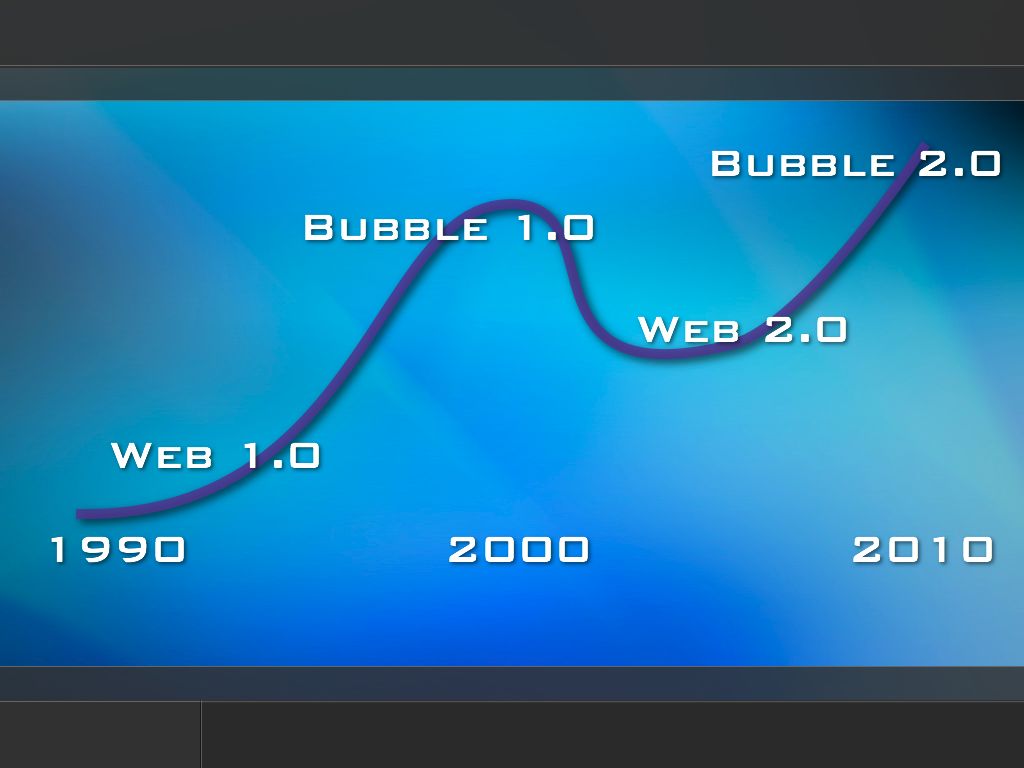
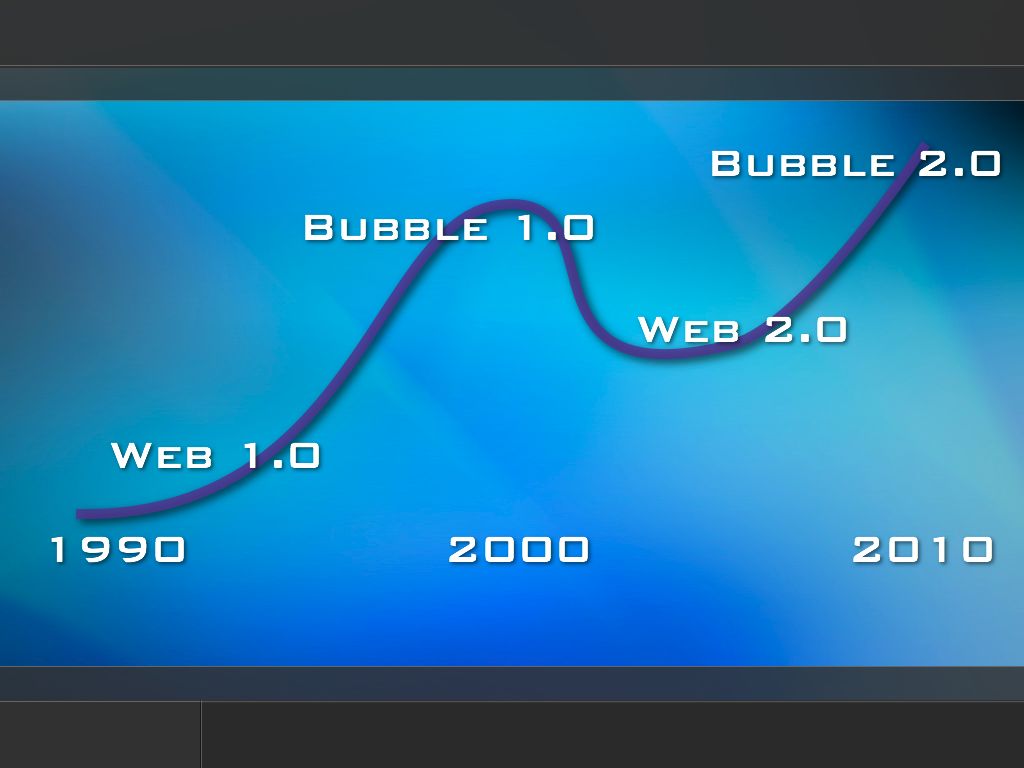
| Joi I. | BTW, I think web 2.0 is just the popping of bubble 1.0 allowing the philosophy to take back some of the ground taken by the greed |
| Joi I. | I think that the "tussle space" changes a lot depending on how much money and how short term this money is that is crowding into the space |
| Joi I. | the time axis/cycle is important when considering how to survive tussles in bubble 2.0 |
| Kevin M. | Well, latency of modems was poor, and going to IP was better |
| Sep 6 | 5:15 PM |
| David B. | "good enough" is a hugely important concept |
| Joi I. | |
| Steve S. | one reason to partition the tussles, is so that greed in one tussle doesn't need to warp other aspects of the net. |
| Rahul T. | Do people think Mobile phones have a spec that is not useful to most people - soft handoff at high-speeds? Instead, *portable* would be much more useful for most people (?) |
| Clegg I. | good enough is the concept behind the power of the second best solution |
| Rahul T. | for replacing landlines in developing countries (er, emerging regions), at least |
| David B. | I'll plug one my blog posts here: http://www.toyz.org/mrblog/archives/00000225.html |
| Kevin M. | the internet cloud: http://homepage.mac.com/kevinmarks/cloud2.png |
| kc c. | thought that gaming growth exploded in .kr because bandwidth was there, not vice-versa. (gaming forced latency down). did i learn that wrong? |
| Joi I. | World of Warcraft has inconsistent latency but is totally playable |
| Joi I. | It is pretty latency tolerant |
| Joi I. | and bandwidth isn't that important except for distributing the CDs |
| Doc S. | I've said "Web 2.0" will be what we call the next crash. It will be an adjective to modify "crash", just like "dot com" modified the last one. (Sorry Greg!) |
| David B. | "good enough" is what makes the net work (the business and opex models) If you make it otherwise, it these things break, and the opex, capex don't permit the "marketplace" with low barriers etc. work |
| Doc S. | |
| kc c. | did visit sony online, they have their own network operations staff/infrastructure because latency is so important for some of the games |
| Joi I. | I agree Doc S |
| Sep 6 | 5:20 PM |
| Joi I. | I think good games can design around latency issues |
| Rahul T. | Guarantees only are in the single network |
| Steve S. | The problem is that Web 2.0 is a term that refers to a whole collection of things -- many that will continue, some that (by now) are hype. This collection has generated some new insights into how to engineer distributed apps to allow humans to interact with each other. This insight and the applications won't crash, even if the flood of capital creates a bubble that does eventually pop. |
| steve k. | KC - the PC guys have mroe issues. Playstation and Xbox have control over the software and the end device, PC multiplayer games have to more work at the cre to make up for that. |
| Kevin M. | |
| Joi I. | BTW, I played World of Warcraft from the Boeing Connexion service for the whole flight Tokyo->Frankfurt and I also play over GRSP. It's very robust. SOME games will require it, but the biggest game in the world right now doesn't need a better Internet |
| Doc S. | So Connexion is still up? |
| Joi I. | I think they announced it is winding down, but still running. |
| Rahul T. | Have folks come across a quadruple play? In Europe, some folks have talked about a low-speed but RELIABLE network for electricity utility, public service, etc. needs (including metering, control, etc.). Has a need for 100% coverage and high predictability |
| Joi I. | and I heard a rumor that Luftansa is trying to cut a deal of some sort |
| David I. | |
| Doc S. | I've used it twice, both times on SAS. Failed. 2X $29. |
| Joi I. | ;-P |
| Joi I. | I've used it over a dozen times. Only once was it down, but they let me talk via the pilot to support guys and they got it running for me. |
| Steve S. | Typical online world needs about 4kb / sec. Latency has an impact (for me) starting around 500 msec and becomes unplayable when it gets over 1000. Today's internet, GPRS, and Connexion works fine -- typically. |
| Steve S. | But I'm a newb |
| Sep 6 | 5:25 PM |
| Kevin M. | |
| steve k. | gamers have a term for people with good bandwidth "low ping bastards" |
| Joi I. | Steve, yeah |
| Rahul T. | instead of latency per se, what about Jitter? |
| Joi I. | When I'm high latency I have to play differently, but I can still play |
| Clegg I. | jitter is the new latency! |
| Steve S. | jitter doesn't matter much, you're not streaming media |
| Joi I. | ;-) |
| steve k. | I totally agree on fidelity's vmail and vmail in general. who hasnt' started at a new company and had to re-learn a bunch of cockamaie commands to d the same thing you did at your last company? |
| Frank P. | Why design a new 'internet?" to address applications that the current infrastructure doesn't address.... for example, the currency trading app that Steve talked about, or ubiquitous highway transportation system autamation controls. |
| Joi I. | We deal with it. We just say or type "lag" and people just wait for you or cover you |
| Kevin M. | Cheshires laws of network dynamics: |
| Kevin M. |
|
| Frank P. | the current internet is good enough for who it's for |
| Frank P. | the next net will be good enough for the rest of us |
| Doc S. | What's the design principle of conversation? That was a question asked by Reese Jones at Farallon 17 years ago. Back then he believed in the long run we'd all need "software for telephones". At the time ISDN was broadband for the privileged. |
| Kevin M. | I hate phones, I use face to face as my primary voice tool |
| Joi I. | |
| Doc S. | nice graph, joi. |
| Rahul T. | It's not about the speed! (IMHO) |
| Rahul T. | [for the next network] |
| Joi I. | oops, I resent it by accident. Sorry |
| Doc S. | I thought you edited it and sent it again. :-) |
| Joi I. | no ;-) but you can think that. That's better |
| Sep 6 | 5:35 PM |
| Doc S. | Hey crowd... I'd like to share with ya'll what we're doing in Santa Barbara — a pure infrastructural play, currently — and seek thoughts and help around thinking the future economics of the matter. Provocative thought: what are the first costs of light blinking into fiber, or low wattage RF in wireless environments? What are the economics of a pure infrastructure (equivalents of roads and water systems, but of communications capacity) and how do we understand, much less sell, them? Or do we need to seel them at all, since we're talking about a tide that lifts all boats? Angle: we're I talking about "because" rather than "with" effects. More money is made more ways *because* of infrastructure than *with* it. Anyway, Santa Barbara is just getting started with this, and we're looking for some co-thinking help. thanks. |
| Sep 6 | 6:05 PM |
| David I. | Evening music... |
| Sep 6 | 8:00 PM |
| Sep 6 | 8:15 PM |
| David I. | testing... |
| David I. | Evening session starting... |
| Joi I. | ping |
| David I. | that's it? ping? |
| David I. | No time stats? |
| Sep 6 | 8:20 PM |
| David I. | |
| Sep 6 | 8:25 PM |
| Frank P. | |
| Sep 6 | 8:30 PM |
| Doc S. | |
| Doc S. | |
| Doc S. | |
| Sep 6 | 8:35 PM |
| Doc S. | Bye to this: http://www.flickr.com/search/?q=greenland&… |
| Rahul T. | There are some who think we can get carbon sequestration to around $20/ton, rather cheap compared to some levels of carbon taxes talked about... |
| Rahul T. | ton Carbon |
| Sep 6 | 8:40 PM |
| Doc S. | Pull quote: "We have to avoid the unmanageable and manage the unavoidable." |
| Doc S. | Applies to other topix. E.g. open source (not really) competing with Microsoft. |
| Doc S. | Question... Is there a non-legislative, non-regulatory free-market case that can be made for fighting global warming. In other words, what are the businesses here? (I think there are some.) |
| Sep 6 | 8:45 PM |
| Kevin M. | the energy efficiency businesses do provide value that can be sold |
| Kevin M. | Removing Coal's grandfathered in exemptions from environmental impacts on other grounds would also tip the balance |
| Doc S. | I think there is business both in providing and preserving whatever we value. The desire, the appetite, should drive new and creative businesses, and not just new and restrictive laws. |
| Frank P. | |
| Kevin M. | http://xrl.us/rmfi - how Coal gets away with it |
| Robin C. | I'm working on this day and night, but carbon taxes would enormously facilitate getting the job done, and help us as users and consumers to make rational choices that is very difficult without carbon credits...should I buy that paint at the hardware store I can walk to for $10/gallon, or drive to Home Depot and buy it for $7? |
| Sep 6 | 8:50 PM |
| Doc S. | Also, in respect to Frank's link, I'd like to hear somebody to explain (offline or to our crowd), simply, what "carbon credits" are, and how the market for them works. There are schools doing fund raising right now by buying and selling carbon credits. Interesting development. |
| Rahul T. | Carbon credits are a parallel to SO2 credits for pollution - market based mechanism to reducing pollution |
| Rahul T. | Everyone (producer of energy, e.g.) gets an allowance for how much they can emit, and they can then trade with others who can be more efficient |
| Rahul T. | As the price goes up, people emit less (is the theory) |
| Robin C. | market in carbon credits is very interesting. This morning I checked in with the chicago climate exchagne. A tone in US is worth $6, a ton in Europe $32. |
| Eric C. | http://terrapass.com/ - "Clean up after your car" |
| Rahul T. | In practice, the challenge on the credits is how how to manage intl. transactions |
| Rahul T. | Yes, and in Sweden, carbon has a $100/ton tax (from what I remember - pl. correct me if I'm wrong, Anders) |
| Sep 6 | 8:55 PM |
| Frank P. | |
| Frank P. | |
| Rick W. | So how do we bring this back to building an optimal network of the (near) future? For example, I understand that today's Web servers actually cost less off the shelf than the additional expense of powering and cooling them with electricity. Can we begin to incorporate ecologically-smart design thinking in the pipes and machines of our communications and information and entertainment systems? |
| Rahul T. | Sorry, I am not sure of the elec. needs story for a server |
| Doc S. | Rick (or anybody... Kevin?)... are there hard numbers for the cost of hardware vs. power off the grid? |
| Sep 6 | 9:00 PM |
| Kevin M. | energy density is a key parameter in server design, yes |
| Rahul T. | The original claim of 13% of energy needs was debunked... |
| Rahul T. | (rather, electricity needs) |
| Rahul T. | A more interesting challenge is "vampire power" - the little bits of power drained by all devices/appliances in the home |
| Rahul T. | E.g., a microwave oven uses more power in its idle state than powered up |
| Tim D. | Also known as the myth of "STANDBY" mode |
| Rahul T. | why is that myth? |
| Tim D. | actually very consumptive of power |
| Rick W. | I'm happy to be debunked on the reality of server energy consumption. :) Regardless, the larger question/issue still remains. |
| Tim D. | consumers want the benefit of apparent instant ON, but it doesn't work that way for CE devices |
| Kevin M. | I wonder how much saving moving from CRT to LCDs is saving |
| Rahul T. | |
| Rahul T. | claims 8% of household use is standby power (UK govt. study) |
| Kevin M. | well, it works for my laptop. |
| Rahul T. | CRT to LCDs - LOTS of saving |
| Kevin M. | but thats becauses Apple made it a strict goal and made every slow part of starting up get fixed |
| Tim D. | NO STANDBY function on CE - LOTS too - nice link |
| Sep 6 | 9:05 PM |
| Rahul T. | |
| Sep 6 | 9:10 PM |
| Rahul T. | Data center power usage study (myths found out) |
| Doc S. | I think there is a huge business opportunity in new cars from non-usual suspects. |
| Kevin M. | there is a boom in electrical powered cars - golf cart rallies |
| Rick W. | Thanks Rahul -- I feel a little greener already. |
| Robin C. | In US, the vehicle miles travelled per person has doubled since 1980. We need to solve not just the mpg problem, but also the distances required to conduct our routine lives. i.e. sprawl, and development patterns. |
| Sep 6 | 9:15 PM |
| Doc S. | |
| Sep 6 | 9:15 PM |
| steve k. | I am struck by how many paralells between this and the telcos. hge installed base of investment we dont want to write off. massive change but uncertainty about the tipping point where is all goes to a new equilibrium. Shrewd current era CEO's fguring they and their buddies can get rich and get out before it really gets bad... |
| steve k. | sigh |
| Kevin M. | Regulatory capture - the coal legislation is unbelievable |
| Doc S. | I think for every callous captain of industry there are a dozen ambitious entrepreneurs to take advantage of that. |
| Rahul T. | There is hope - innovation can help with energy (not just telecom!). von Weizsacker talks of Factor Four - double output and half the energy input through new ideas |
| Rahul T. | Most of it talks about demand... |
| Sep 6 | 9:20 PM |
| Kevin M. | |
| Robin C. | It is really hard for entrepreneurs to fight that status quo. Yes we do it, but is is daunting and outcomes very uncertain. |
| Sep 6 | 9:30 PM |
| David I. | |
| Sep 6 | 9:40 PM |
| steve k. | us govt is partnering with goldman sachs to privatize roads. intersting to note where our treasury secty came from - goldman sachs? naaah |
| steve k. | privatize the gains - socialize the costs |
| Sep 6 | 9:45 PM |
| Robin C. | and new sec of transportation, announced yesterday, Mary Peters(?), that she was nominated because she agreed with strategy of privatization of roads... |
| Rahul T. | naaah, darknets are just "gated communities" |
| Rahul T. | ;) |
| steve k. | they'll sell them back to us whenthe maiteance costs get too high and the steel is rusted thru |
| steve k. | sortve like the telcos... |
| steve k. | its a given we will end up subsidizing a broadband build to poor & rural areas - having deregulated returns in the past 10 years on tha rgument that it would lead to more investment in the network. roads will be the same |
| Sep 6 | 9:50 PM |
| David I. | It is a terrific experience watching several episodes of a show in a row. Very different than watching a single episode disrupted every 12 minutes by a commercials. |
| steve k. | level3 saying the majority of their internet traffic is data downloads |
| steve k. | sorry - video downloads |
| Kevin M. | also, bittorrent is symmetric bandwidth |
| Sep 6 | 9:55 PM |
| Kevin M. | I am getting hooked on TV series on DVD via netflix |
| steve k. | broadband WILL be a universal service offering. politically impossible to see e-voting, on-line homewor, on-line parking ticket payments only for the uper 50%-60% of households. David reed last year noted that emergence of political blogger class will add that much more momentum behind broadband universal service |
| David B. | |
| Sep 6 | 10:05 PM |
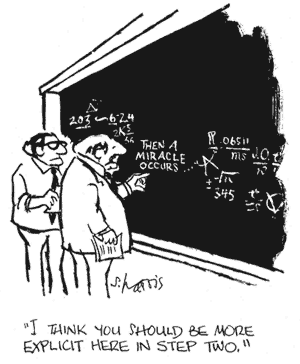
| David B. | Scott B. Please sned link for that paper. I think I've seen it and recall that it looked like another "and then a miracle" timeline |
| David B. | the hole tends to be "94-97" |
| steve k. | the internet is a network that never got beyond just running in "safe mode" - not necessarily bad |
| David B. | i agree that the browser was a key, but not convinced it's the answer |
| Kevin M. | I think the conference thing is a function of lots of people logging on having been travelling for a while |
| scott o. | the want had to be there for the browser to have a market |
| Kevin M. | and getting a big bolus of email, rss, etc downloading that has been buffered for them while travelling |
| David I. | |
| Kevin M. | we are the people who thrive on IP connectivity? |
| Kevin M. | God neutrality |
| Sep 6 | 10:10 PM |
| David B. | that's what we saw for 75 years in telco right? |
| Rick W. | For East Coast Americans, it's Yankees (centrists) versus Red Sox (edgers). |
| Rahul T. | Calvinism... |
| David B. | IN will protect us from all thos "good enough" losers |
| Sep 6 | 10:15 PM |
| Lionel G. | From last year: |
| Lionel G. |
|
| David B. | |
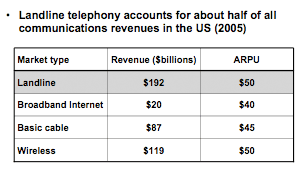
| David B. | i'm not sure about that 95% number quoted |
| Rahul T. | Yes, but wireless includes long-distance within it... |
| Rahul T. | Landline similarly has Local and LD in it |
| Doc S. | Three metaphors (and more) for the net: |
| Doc S. | |
| David I. | This is interesting figuree, David B. But using metaphors...think about magazine subscriptions. How much do people read of the magazines or newspapers to which they describe? |
| Rick W. | Bell special access/private lines (which constitutes much of the middle mile backhaul for the Net) by itself is some $16 billion in annual revenues, with returns of 50-100 percent. |
| Robin C. | my daughter owned her imac for three years and never used an ethernet cable once--didn't know it existed -- yet she is online all the time all over the world. The world is wireless for her and it was ubiquitous (major cities). |
| Kevin M. | |
| Kevin M. | cloud thing |
| David I. | As we all probably know, the *revenue* of the landline may not reflect either *use*, *demand*, or *critical* nature. It might just be momentum. |
| Sep 6 | 10:20 PM |
| David B. | right, but someone explicitly said 95% of revenue" was something. It didn't sound right to me |
| Doc S. | "Content" can be regulated in ways speech cannot. |
| Robin C. | re children and internet security: |
| Robin C. | 1) have computer screen in a visible location (i.e. you frequently see what they have on the screen -- no laptop use in the bedroom) |
| Kevin M. | danah was good on this - the children know to discount the unknowns |
| David B. | or you could trusst your kids |
| Robin C. | 2) I have always wished for a .xxx for those things that are undeniably x-rated. Maybe there are lots of things that can be considered grey, but we all know pornography when we see it..that should be .xxx |
| Rahul T. | colleges were a hotbed of activity in 1994-1996 |
| Lionel G. | "he children know to discount the unknowns"? No they don't. |
| Kevin M. | Well, when I found Andrew (10) looking at dubious links (not very dubious, but some iffy flash animations) |
| Steve S. | chain emails with memes looking for a lot of personal information that are then harvested later are a big problem. it gets forwarded from a friend. its fun to do |
| Steve S. | the kids are doing it |
| Kevin M. | Instead of trying to add filtering we sat him down and explained that there were bad people on the net, and things you might see that you wished you hadn't, and he shouldn't follow links from people he doesn't know |
| Robin C. | my kids have stumbled across things and been horrified, and has was pointed out, lots of times they just don't know that something could be a problem. Yes, we need to trust and to educate, but we can't and shouldn't expect to control it all, just the biggest ones. Gone to whitehouse.com recently? |
| Doc S. | "Congress shall make no law respecting an establishment of religion, or prohibiting the free exercise thereof; or abridging the freedom of speech, or of the press; or the right of the people peaceably to assemble, and to petition the government for a redress of grievances." Nothing in there about "content" or "transport". Which is why Congress can restrict the ability of broadcasters to transmit forbidden "content". Should we extend that ability to the Net? Maybe, if we bridge it with the right (in fact defaulted, if all we do is transport content) metaphor. |
| Sep 6 | 10:25 PM |
| Steve S. | kevin, what about links from people he does know? |
| Kevin M. | you need to help them learn to, just as you need to help them to understand other kinds of interaction |
| Steve S. | (btw, i don't have the answer here, we're taking the same approach you are |
| Steve S. | and i think its the right approach |
| Steve S. | but i am thinking of building a dmz for the kids computers |
| Kevin M. |
|
| Rick W. | "Tubes!" -Senator Ted Stevens |
| David B. | Scott, i think my "chicken/egg" question is close to your "there is no business model for the internet" theme from a few years ago, or speaks to some of the same underlying questions. |
| steve k. | by the way - the broadband over power line technology has gotten pretty scary good. 10 MB symmetrical with very robust servce. |
| David B. | steve, have the economics become mmore practical? I haven't looked closely at it for years |
| steve k. | yes they have. |
| scott o. | note - in cambridge we have digital reading of water meeters via wireless from fixed base stations |
| Sep 6 | 10:30 PM |
| Kevin M. | Jorge was talking about fibre strung along power lines |
| steve k. | its intersting but costs have come down. also have figured outways to get parts of the ntwork paid for as part of the elecricty cost rate base (for metering) and then the broadband rides over the same real-time metering infrastructure for "free" sounds liek a scam, but if you are going to put in a line capable of managing power real time, you might as well ut in 100 MB |
| scott o. | there are places now where the power company does trun off A/Cs etc at peak usage times |
| steve k. | main problem is that that electic cos were so burned in the buble years that they are very gu sy on telecom |
| steve k. | gun shy |
| Kevin M. | the viridian project for 'cuddly power meters' was interesting |
| steve k. | actually I think its 20-30 MB symmetrical - apologes |
| Rahul T. | fiber is REGULARLY strung along power lines |
| Rahul T. | biggest fiber in Africa is with power utilities |
| Rahul T. | US use of wireless for meter reading is proven but old technology - can't enable real-time or near-real time (in a store & forward architecture) |
| scott o. | comment a few years ago - the home must be wireless because there are not enough techs to come to homes to install anything else |
| Sep 6 | 10:35 PM |
| Rahul T. | Toronto Wifi - coming from power company who has a mandate to do smart metering |
| Robin C. | At Zipcar (100k of transactions a month, NOT millions, I admit) found that people felt MORE satisfied when we automated routine interactions. i.e. automated reservation and extension of cars. This let Zipcar spend its customer service $ on things that were unique. We constantly worked on solving with technology as many routine/anticipated issues so that live customer service was minimized. |
| Kevin M. | |
| Rick W. | In the US, less than 4 percent of broadband ISPs are not affiliated with the incumbent telco/cable companies. This is in sharp contrast to the vibrant ISP competition (large, regional, and small) in the narrowband dial-up market. |
| steve k. | robin - just signed up for zipcar and very nice and automated |
| kc c. | i am confused about the question regarding 'what happened betweeen 1993-1996.' nsf actually provided non-trivial coordination/policy to a transtion so that the existing R&E, govt, and the growing commercial connectivity would not suffer operationally during the transition (to the extent possible) and ultimate decommissioning of the nsfnet backbone (completed in 1996). there was much capital infusion from VC community as well as voice network revenues, there was much lying and hype about actual growth rates and pricing at below operational cost, and there was lots of hard work by industry and 'get/keep out of the way' regulatory policy. there was no magic pixie dust. a paper on how the nsf used its leverage with the R&E community to prevent network partitioning as infrastructure commercialization and privatization progressed: http://www.caida.org/publications/papers/1… (i don't recommend reading it, but note there was a plan, and it facilitated (not to be confused with drove) the superlative growth in demand. |
| David I. | Microformats is a Good Thing(TM) |
| Eric C. | We're starting to add Microformats to Blogger |
| David B. | kc the question was one of customer acquisition and "demand". Why did a mainstream user not care about the net in 1993 and want it by 1994 |
| David I. | I was at NYNEX from 1993 to 1995 and participated in writing requirements for video dialtone network, which did not launch. |
| steve k. |
|
| Sep 6 | 10:40 PM |
| David I. | Compared to what we were doing, the web just worked. |
| Eric C. | |
| David I. | If you were interested in ubiquitious networks, really interested and you encountered the Web, especially after Mosiac was released, it was *game over*. You changed teams and went to the web. |
| David I. | A trickle became a stream, became a river, became an ocean! |
| scott o. |
|
| David B. | right, I get that Greg. But you're not the segment i'm asking about. you (and me) and our kind don't represent a market that matters. the people i'm talking about are those that would have no idea they were interested in "ubiquitious networks" or not |
| Kevin M. | |
| Kevin M. |
|
| Sep 6 | 10:45 PM |
| Kevin M. | Martin, lots of them being IP is important as then you cna move between them - the room area network being IP and bridging to the internet cloud if it's there is a key part fo the zeroconf |
| Kevin M. | Nintendo DS do this really well |
| kc c. | davidb: i question the assumption that there was a step function between 1993 and 1994. (except in mike o'dell's quotes?) but 1994 was when the NSFNET started to decommissioned the backbone, and made sure that all 3 emerging commercial backbones would connect to NAPs across the country. on what data is the question based? |
| Sep 6 | 10:50 PM |
| Kevin M. | anyone want to play werewolf? |
| David B. | the step i'm thinking of is the one where earthlink's phones (and the tons of ma pa ISPs) were getting orders from regular people. Before that u had to "know somebody" and had to be a tech geek (so by definition you were selling to tech geeks) |





BigHook Chat
People in this transcript
- Anders Comstedt
- Andrew Maffei
- Chuck Gritton
- Clegg Ivey
- Cynic
- David Beckemeyer
- David I (isen)
- David Isenberg
- Display
- Doc Searls
- Don Jackson
- elliot noss
- Eric Case
- Frank P.
- Gardner Miller
- Joi Ito
- Jorge
- Joshua Auerbach
- kc claffy
- Kevin Marks
- Lionel Gibbons
- Martin Geddes
- Rahul Tongia
- Rick Whitt
- Robin Chase
- scott o bradner
- steve kamman
- Steve Smith
- Susan C
- Tim Dodd
- Tom Freeburg